Multiple generations of stars in the Tarantula Nebula

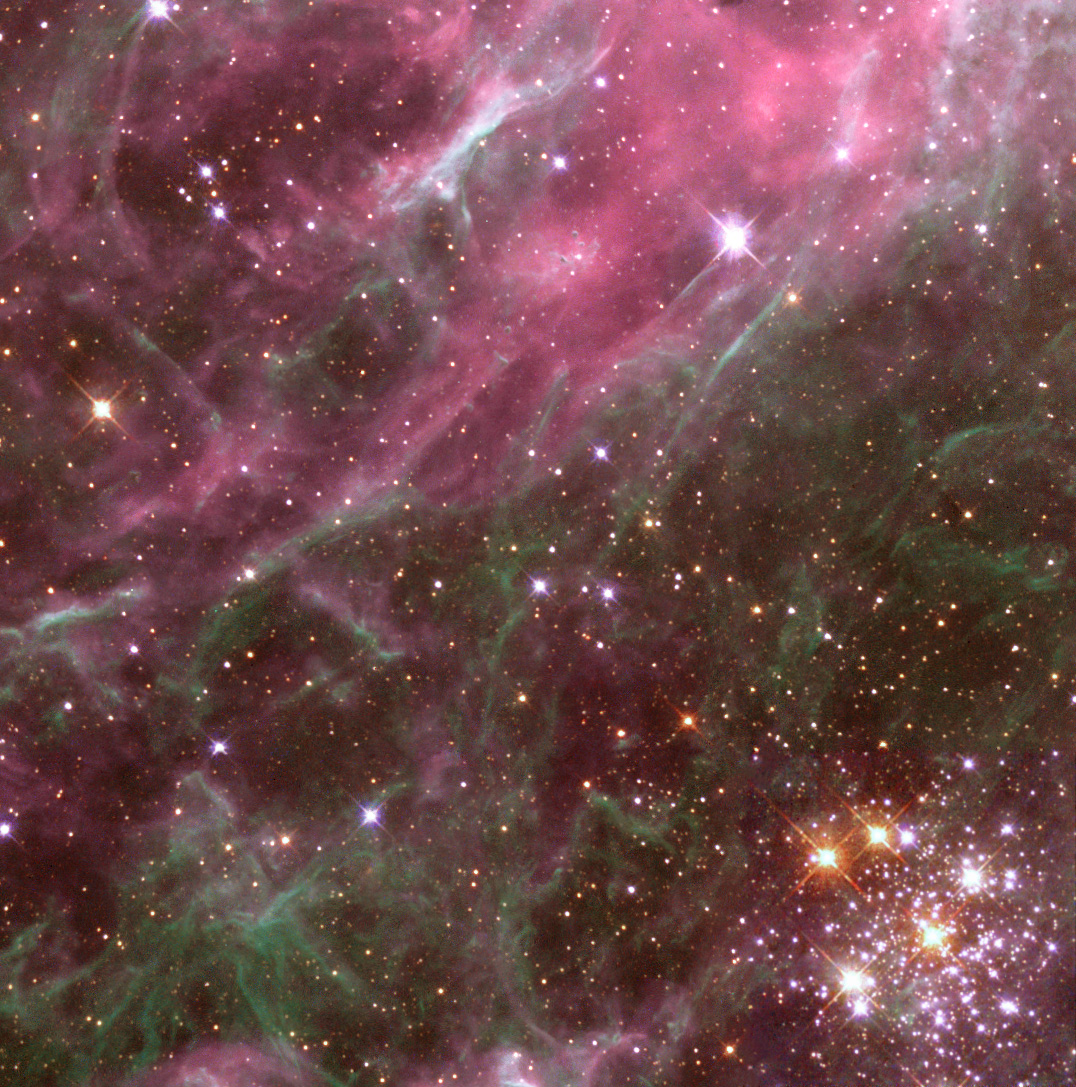
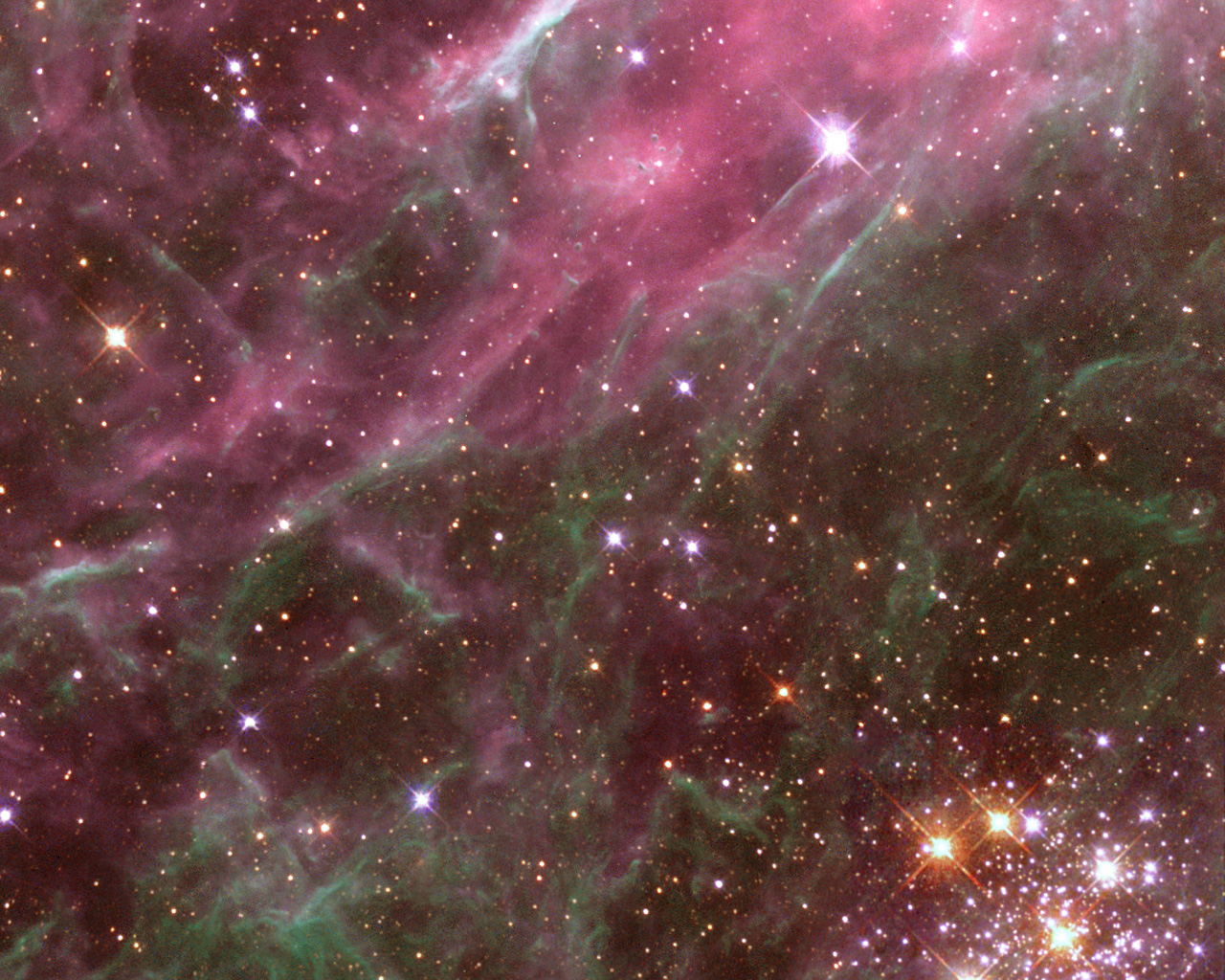
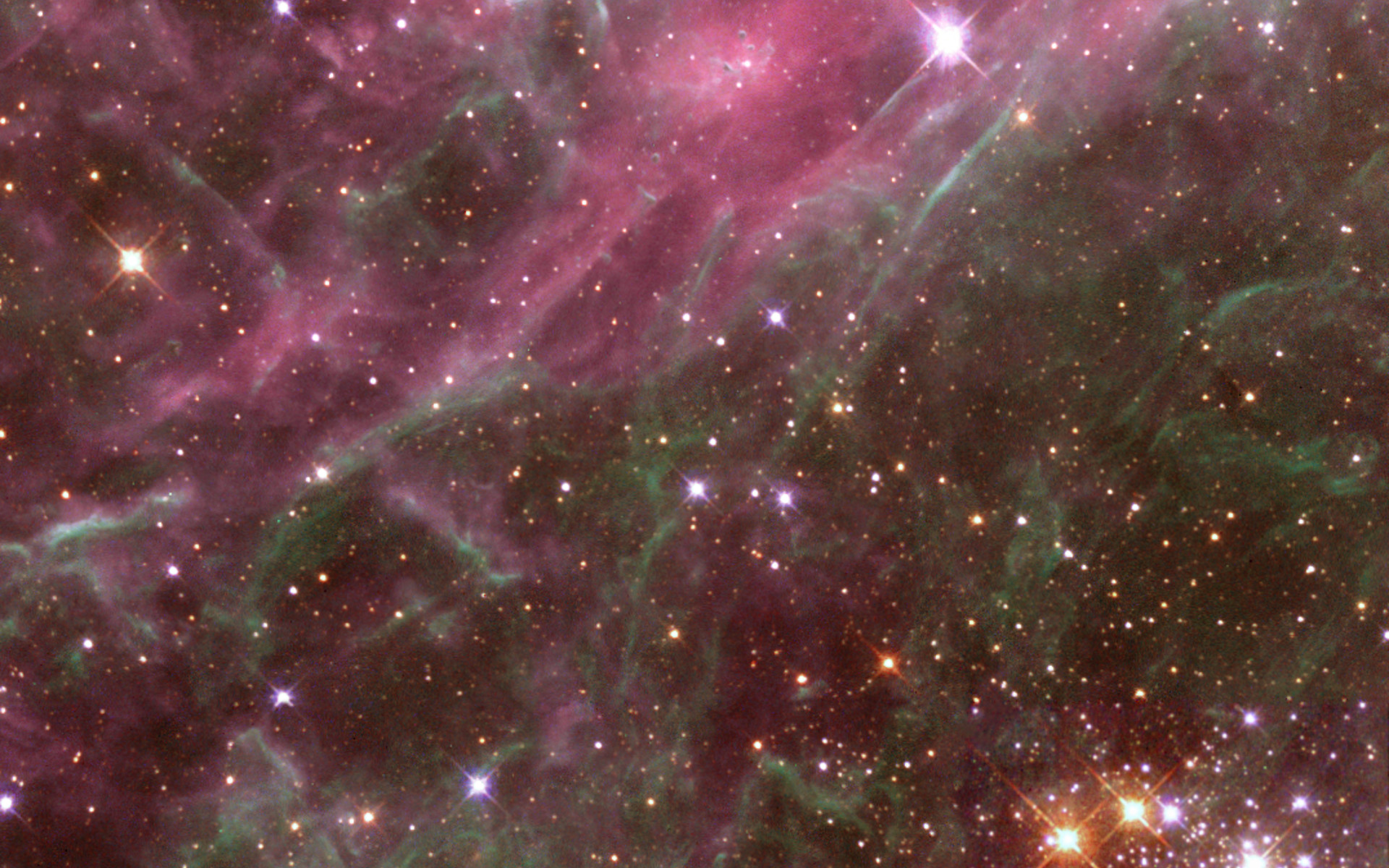
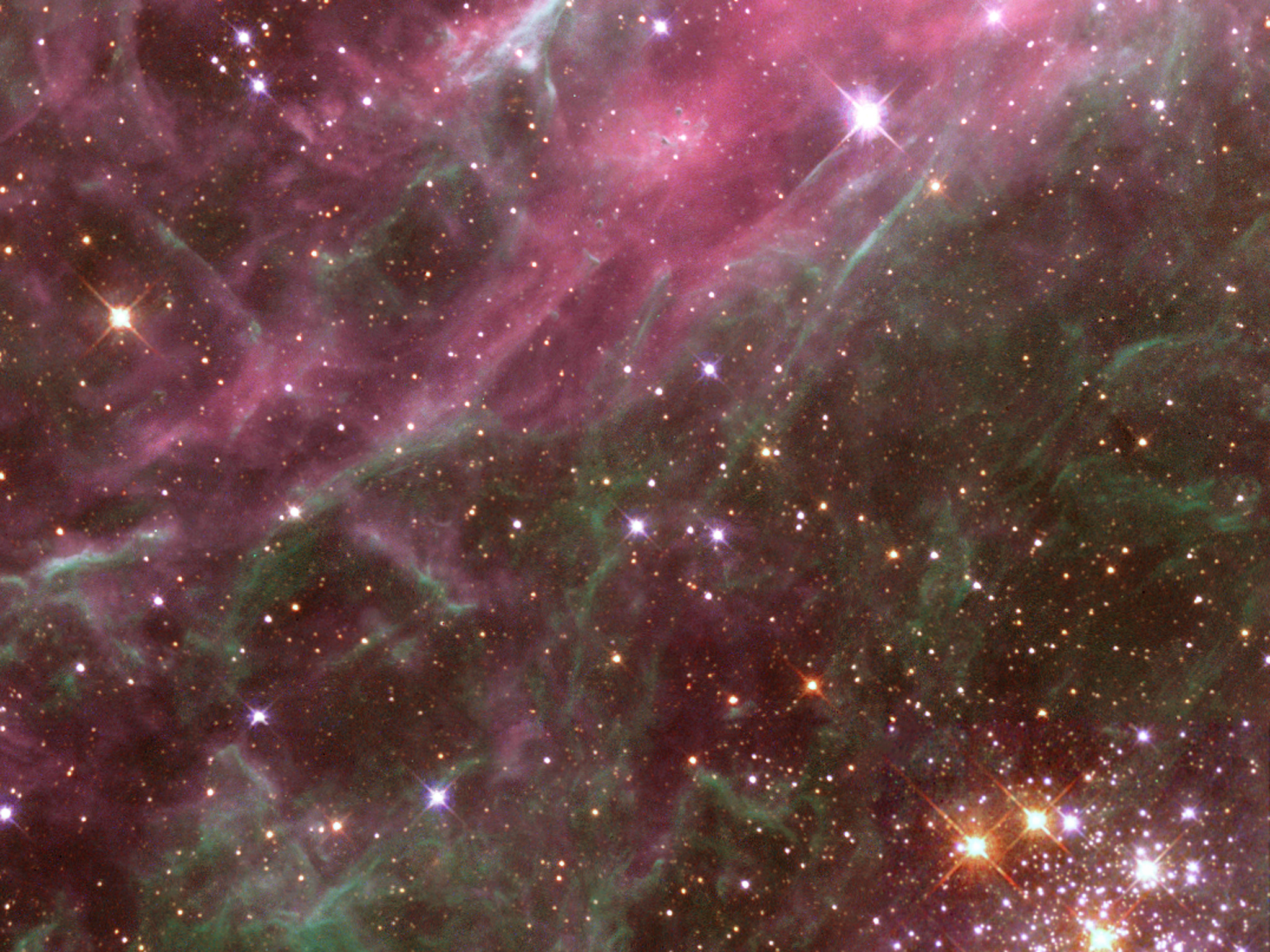
The star cluster Hodge 301 is an old cluster. Many of its stars have already exploded as supernovae. The filaments in the upper left corner have been compressed by the explosions of these stars. Elsewhere in the picture news stars are being born.
In the most active starburst region in the local universe lies a cluster of brilliant, massive stars, known to astronomers as Hodge 301.
Hodge 301, seen in the lower right hand corner of this image, lives inside the Tarantula Nebula in our galactic neighbor, the Large Magellanic Cloud.
Credit:About the Image
About the Object
| Name: | 30 Doradus Nebula, Hodge 301, R136, Tarantula Nebula |
| Type: | Local Universe : Star : Grouping : Cluster Local Universe : Nebula |
| Distance: | 170000 light years |
| Constellation: | Dorado |
| Category: | Nebulae Star Clusters |

Wallpapers




Coordinates
| Position (RA): | 5 38 17.09 |
| Position (Dec): | -69° 4' 56.27" |
| Field of view: | 1.78 x 1.80 arcminutes |
| Orientation: | North is 225.9° left of vertical |
View in ESASky:

View in WorldWide Telescope:

Colours & filters
| Band | Wavelength | Telescope |
|---|---|---|
| Ultraviolet U | 336 nm |
Hubble Space Telescope
WFPC2 |
| Optical Oiii | 502 nm |
Hubble Space Telescope
WFPC2 |
| Optical V | 555 nm |
Hubble Space Telescope
WFPC2 |
| Optical H-alpha | 656 nm |
Hubble Space Telescope
WFPC2 |
| Optical Sii | 673 nm |
Hubble Space Telescope
WFPC2 |
| Infrared I | 814 nm |
Hubble Space Telescope
WFPC2 |